What is the Palouse Prairie?
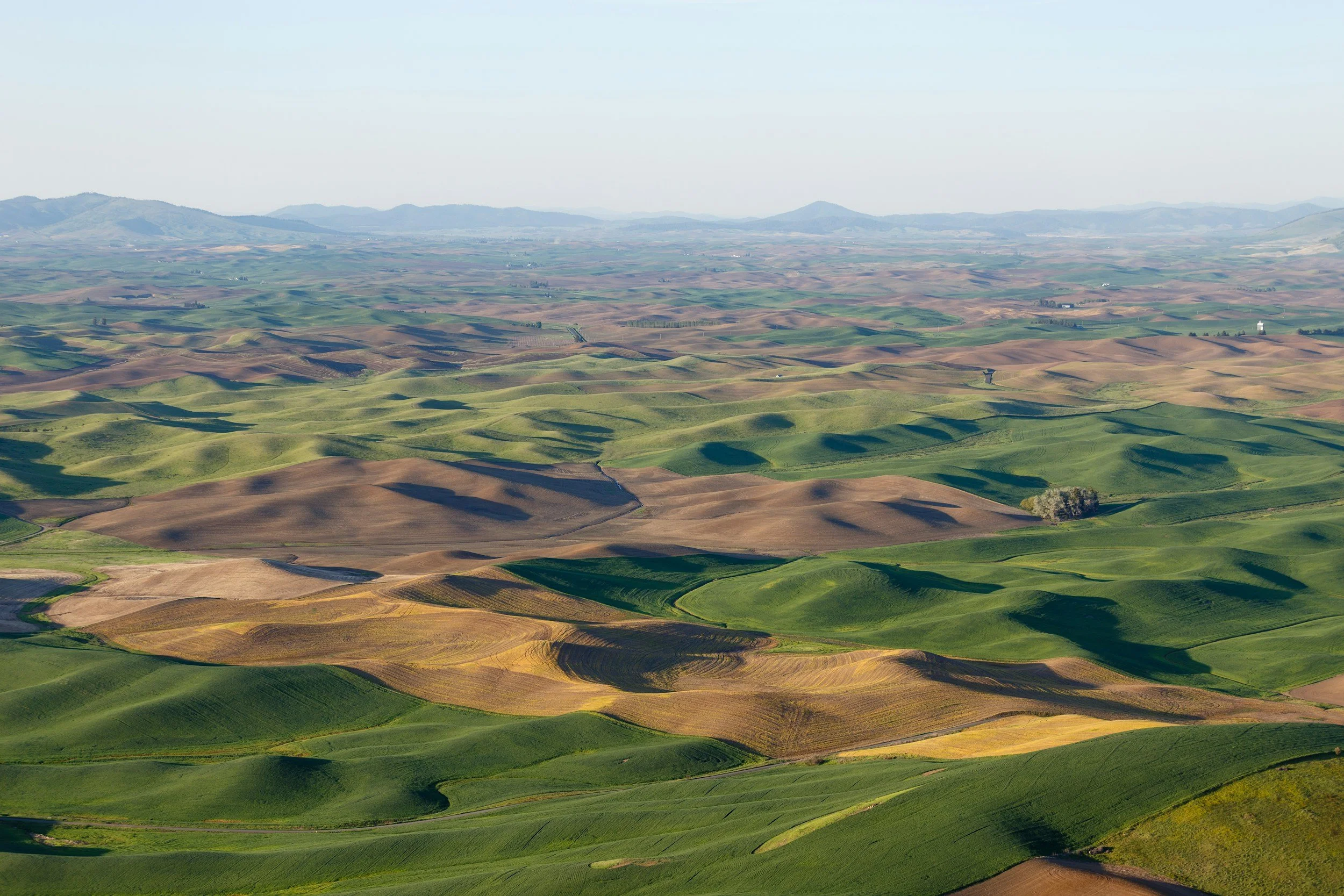
The region of southeastern Washington and adjacent Idaho that has rolling hills of deep soils is known as the Palouse.
On its eastern border, this region is bounded by the forests of northern Idaho, and the Snake River forms its southern boundary.
To the north and west of the Palouse are areas of flat terrain and shallow soils, places that were scoured by ice and water during past glaciations and floods.
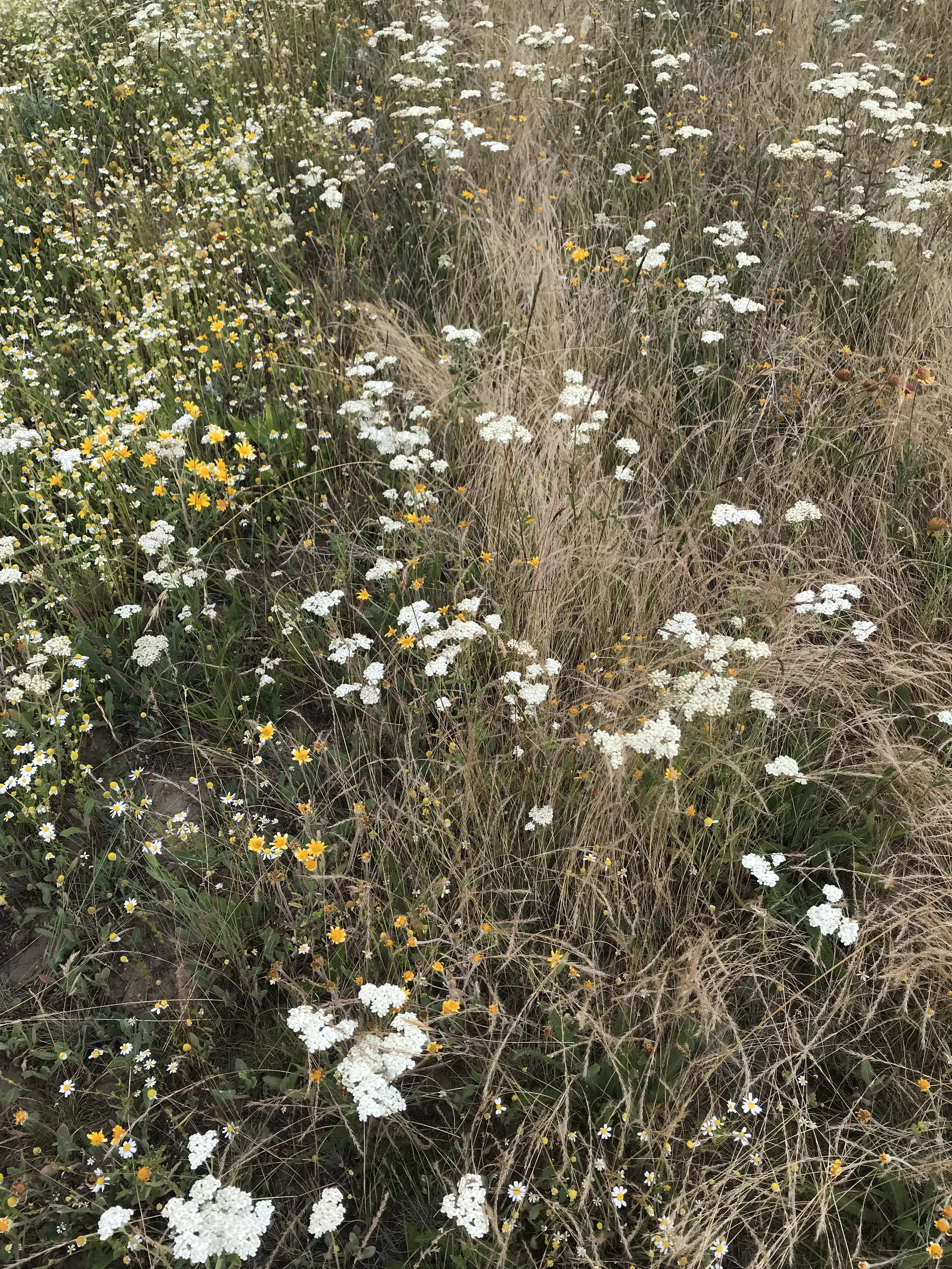
The Palouse Prairie is an endangered ecosystem
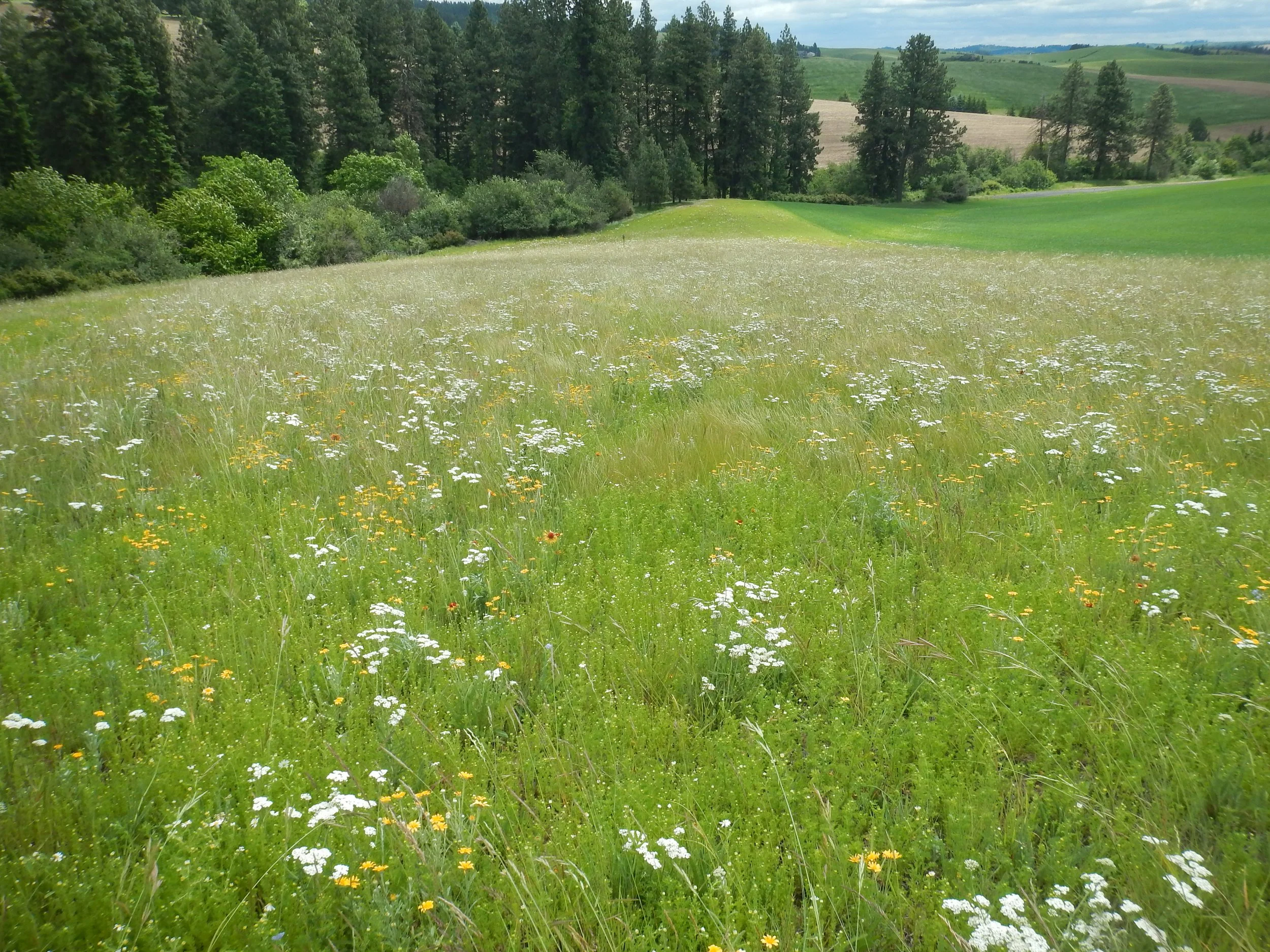
Less than 1% of Palouse Prairie remains today; in fact, by 1900, 30% had already been converted to agriculture! The Palouse is home to some of the most productive agricultural land in the world, but in the interest of biodiversity and soil conservation, we must conserve the remnants and re-establish ecologically viable prairie patches. Currently, restoration techniques are being developed and the U.S. Department of Agriculture is helping restore retired agricultural fields back to prairie through conservation programs. If you are interested in restoring native Palouse Prairie vegetation on your land, you have a fascinating challenge in store. Regardless of whether you have a small yard or acres of land, growing native Palouse Prairie plants can be very rewarding. For more information, contact the Palouse Prairie Foundation.
In 1855, Stevens was astonished at the 'luxuriance of the grass' and the "richness of the soil" in the Palouse watershed. "The whole view,” he commented, “presents to the eye a vast bed of flowers in all their varied beauty.”
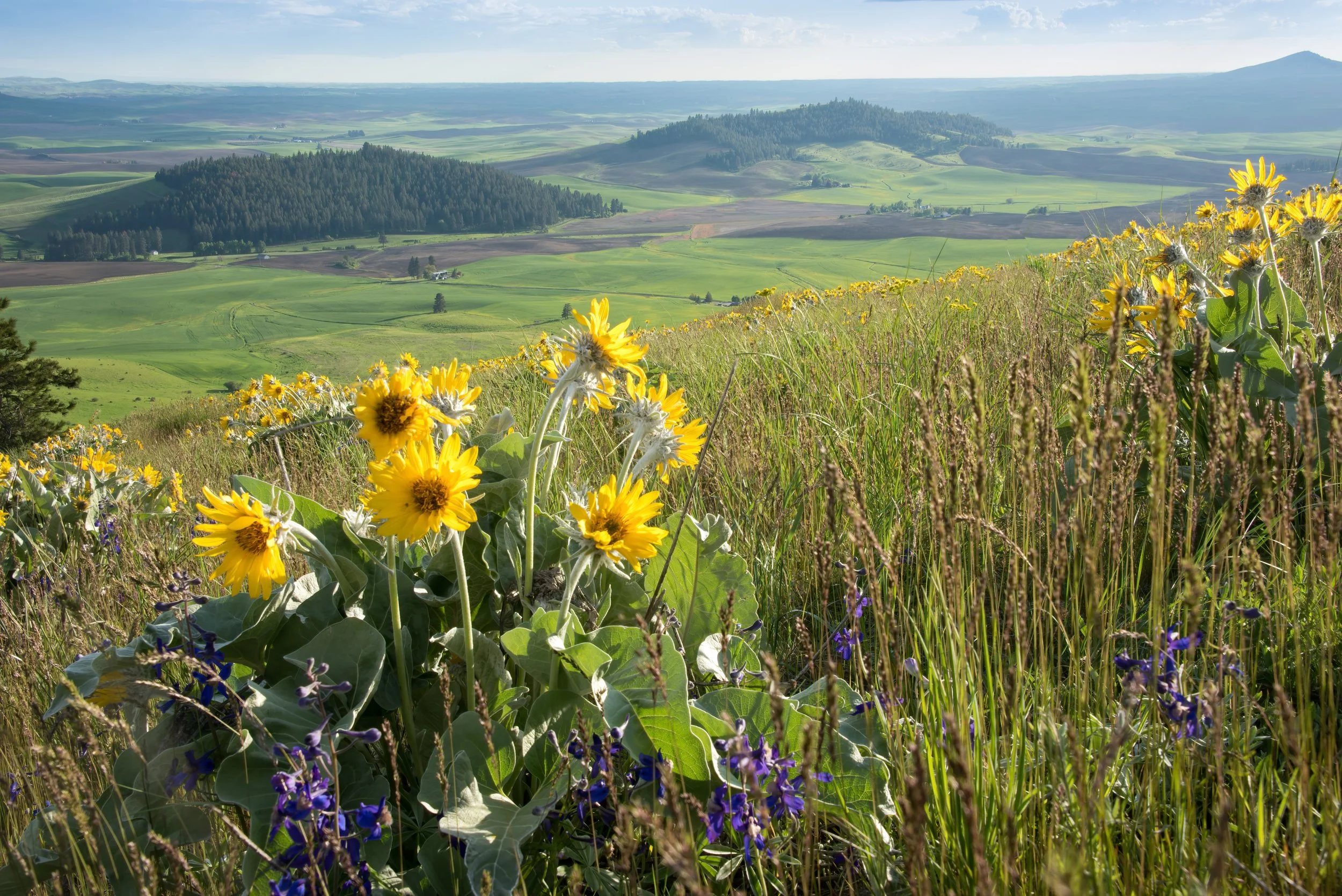
Typical Vegetation in the Palouse
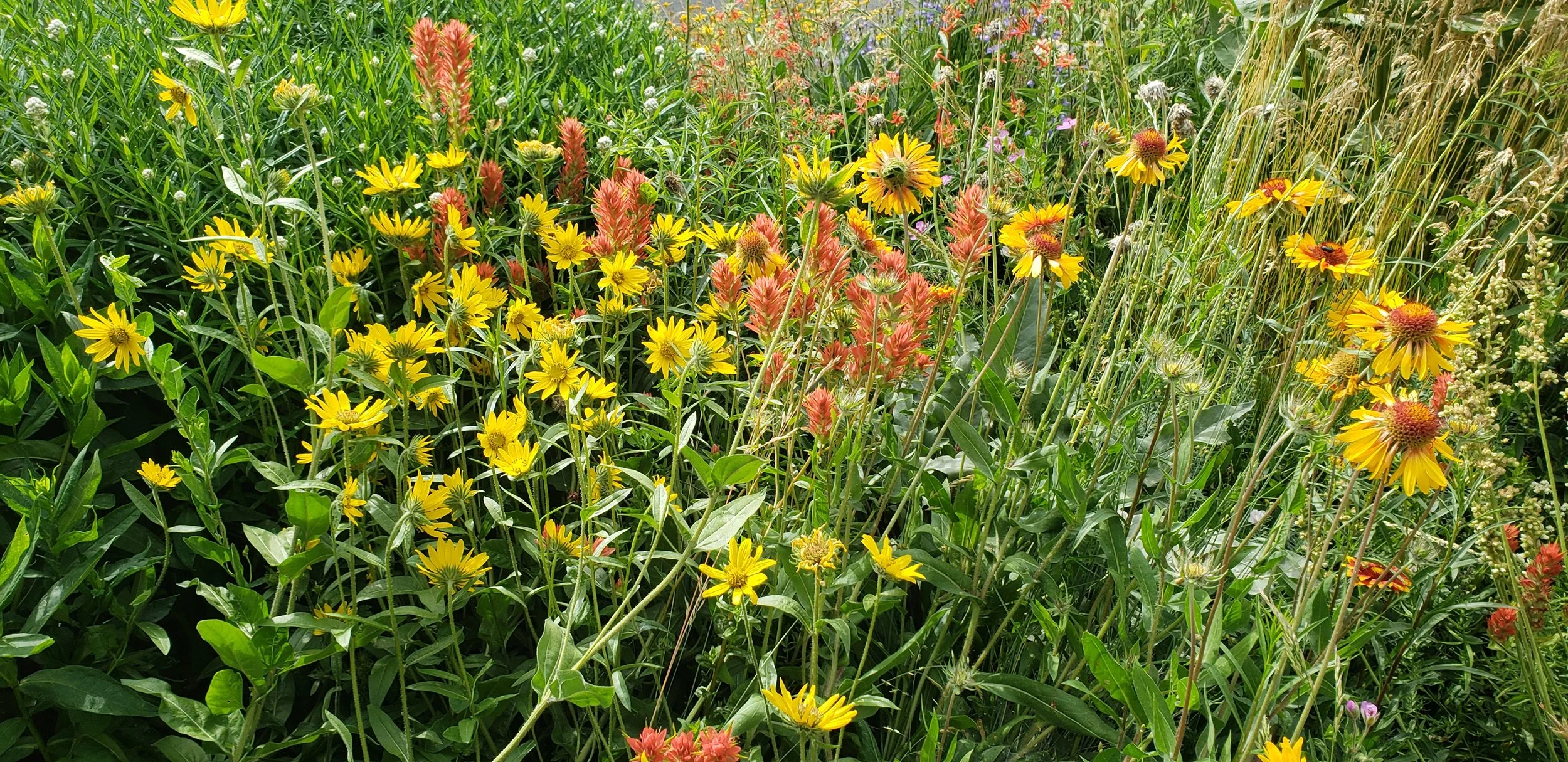
One hundred fifty years ago, the Palouse was carpeted by perennial bunchgrasses growing in tufts or clumps, accompanied by many different kinds of wildflowers. In spring and early summer, the grasses and flowers gave the appearance of a colorful, lush meadow, or Palouse Prairie.
This type of vegetation occurs where the climate is almost wet enough to support the growth of trees. The principal bunchgrasses of Palouse meadows were Idaho fescue, bluebunch wheatgrass, and prairie junegrass. Short shrubs, especially snowberry and wild rose, were common. Mosses and lichens were an important but inconspicuous feature.
Luxuriant camas meadows grew in low-lying areas and swales that were wet in spring. The indigo-flowered camas grow so densely that in 1806 Meriwether Lewis wrote in his journal that the camas meadows resembled "a lake of fine clear water, so complete is this deseption that on first Sight I could have sworn it was water." The camas roots were harvested by first peoples and served as a nutritious, starchy food and trade item.
“Its beauty was wild and untrammeled and the undulating hills were covered with luxuriant grasses.”
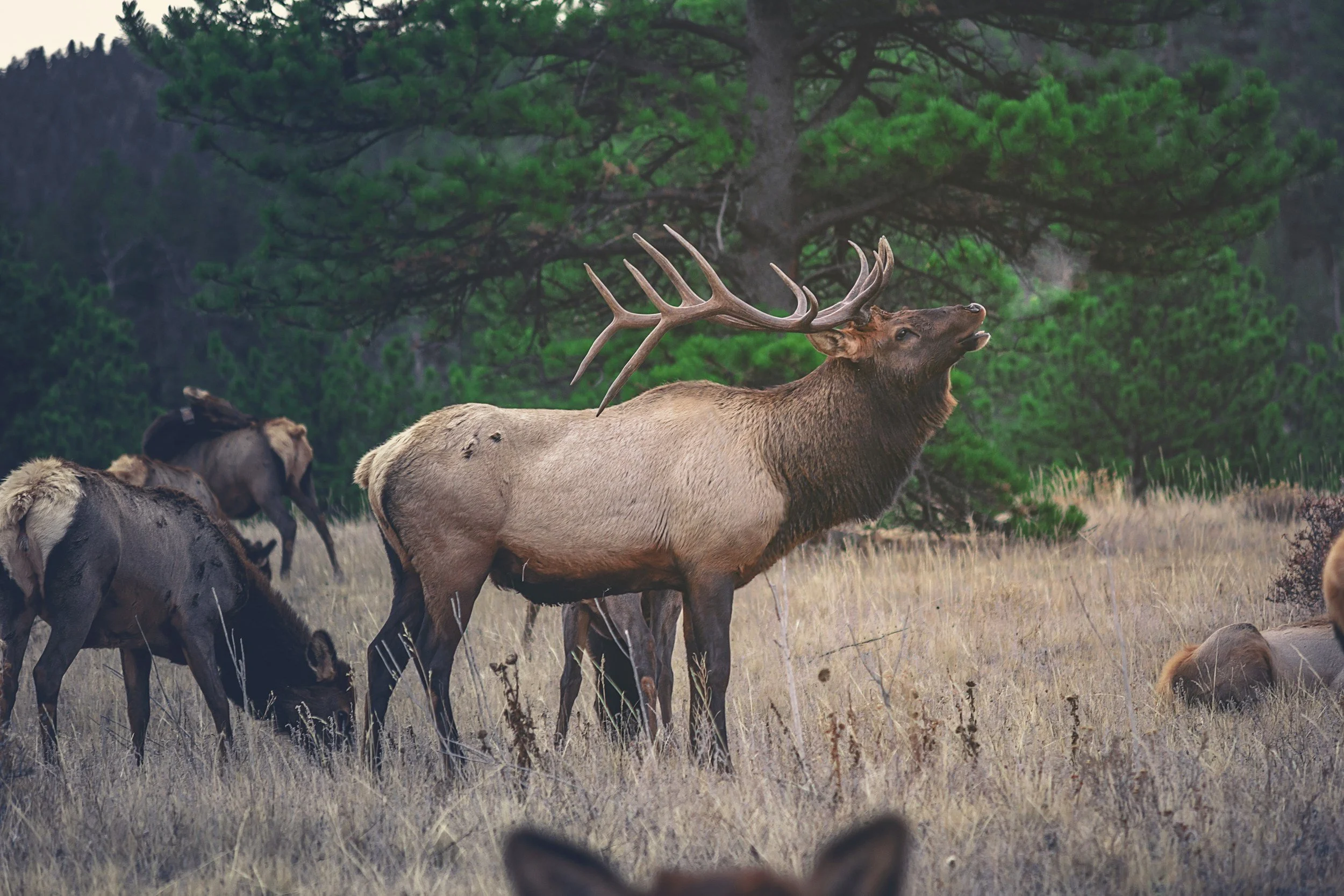
Home to Wildlife
Wildlife was abundant on the Palouse. Deer and elk fed on the Palouse Prairie plants, but bison were rare. Small mammals such as ground squirrels, gophers, and voles were common. Badgers, hawks, and owls fed on these prey species, and hummingbirds pollinated some of the more brightly-colored flowers. The Brewer's sparrow, which depends upon shrub thickets for nesting, was once abundant in the Palouse, but it has become extremely rare and now must rely on sagebrush stands outside of the region. In the spring, huge flocks of sharp-tailed grouse gathered on dancing grounds, where male birds danced to attract females. Due to development and competition with exotic species such as ring-necked pheasants, sharp-tailed grouse that once filed settlers’ lunch-pails are now locally extinct.
The environment below the surface of the soil also teemed with life. Fungi, bacteria, algae, and invertebrates recycled matter, breaking down the massive underground root systems of plants that died. These roots could grow as deep as 15 feet, contributing organic matter to the rich, loamy soil. Areas with especially deep, moist soils provided habitat for earthworms that reportedly reached up to 3 feet in length!
Other important members of the Palouse Prairie community were less obvious. A variety of insects played important roles pollinating flowers, decomposing organic matter, dispersing seeds, and serving as food for a variety of birds.
Prior to Euroamerican settlement, the Palouse River drainage was inhabited primarily by the Palouse people.
The Nez Perce people spent much of their time in the southern part of the Palouse Prairie. The northern fringes were used by the Coeur d'Alenes and Spokanes, and the Cayuses used the area to the southwest. These patterns were fluid, however, with much overlap between the different groups. The annual cycle of hunting and gathering tracked seasonal changes in plant productivity. The cycle began with gathering roots at low elevations in spring; as the seasons progressed, plant and animal resources were harvested at progressively higher elevations. Visit the Nez Perce NHP Visitor Center in Lapwai, Idaho to learn more about the first peoples on the Palouse, or Pah-loots-pu. Additionally, local tribes hold the annual Pah-loots-pu pow wow.
First Peoples
Donate to the Palouse Prairie Foundation today!